
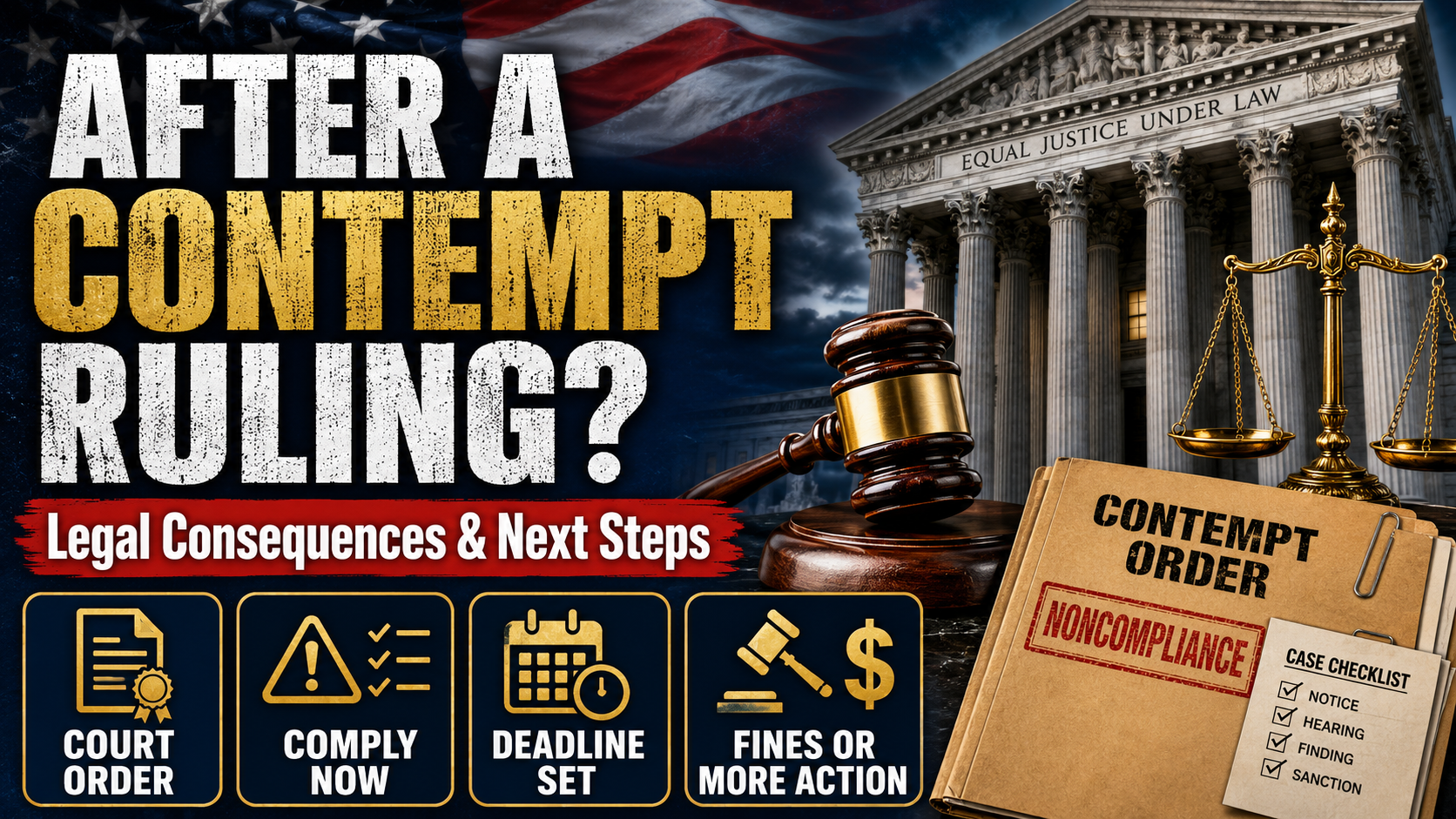
What Happens After a Contempt Ruling? Legal Consequences and Next Steps
A contempt ruling happens when a court determines that someone failed to follow a court order or interfered with the authority of the court. After a contempt ruling, the next steps depend on the type of contempt, the reason for the ruling, and what the judge orders.
A contempt decision does not always mean immediate punishment. In many cases, the court’s main goal is to make sure the person follows the original order and corrects the problem.
The outcome may include fines, additional court requirements, compliance deadlines, or further legal action if the violation continues.
What Is a Contempt Ruling?
A contempt ruling is a court decision finding that a person or organization did not comply with a legal obligation or court instruction.
Courts commonly use contempt proceedings when someone:
- Ignores a court order
- Fails to provide required documents
- Refuses to follow custody or support arrangements
- Does not comply with legal deadlines
- Disrupts court proceedings
- Fails to perform an action ordered by a judge
A contempt ruling may be issued against individuals, businesses, government agencies, or attorneys.
What Happens Immediately After a Contempt Ruling?
After a judge issues a contempt ruling, several things may happen depending on the circumstances.
1. The Court Issues Instructions for Compliance
In many civil contempt cases, the judge gives the person an opportunity to fix the violation.
The court may order the person to:
- Complete a required action
- Submit missing documents
- Pay an amount owed
- Follow an existing court order
- Meet a specific deadline
The goal is usually to restore compliance.
2. Penalties or Sanctions May Be Imposed
If the court believes consequences are necessary, it may impose sanctions.
Possible penalties include:
- Financial fines
- Payment of another party’s legal costs
- Additional reporting requirements
- Restrictions on certain actions
The type of penalty depends on the seriousness of the violation and applicable law.
3. A Compliance Deadline May Be Set
A judge may give the person a specific period to correct the problem.
Example:
A court orders someone to provide documents within 14 days. If they comply within that period, further penalties may be avoided.
If they continue refusing, the court may take stronger action.
What Happens After a Civil Contempt Ruling?
Civil contempt is usually focused on forcing someone to follow a court order.
After a civil contempt finding, the court may:
- Require immediate compliance
- Set conditions for avoiding further penalties
- Order payment of costs
- Continue monitoring compliance
In some cases, a person may avoid additional consequences by doing what the court originally required.
Example:
A person is held in civil contempt for failing to make required payments. If they make the payments or follow the court-approved plan, the contempt issue may be resolved.
What Happens After a Criminal Contempt Ruling?
Criminal contempt serves a different purpose. It is generally intended to punish conduct that challenges the authority of the court.
After a criminal contempt ruling, possible consequences may include:
- Fines
- Jail time
- Probation-like conditions
- Other criminal penalties
The process may include additional protections because criminal contempt can involve punishment.
Rules vary depending on the jurisdiction.
Can Someone Appeal a Contempt Ruling?
In many legal systems, a person may have options to challenge a contempt ruling.
Possible legal options may include:
- Filing an appeal
- Requesting review by a higher court
- Asking the court to reconsider the decision
- Challenging the legal basis of the ruling
The ability to appeal depends on factors such as:
- The type of contempt
- The court involved
- Local procedural rules
- Whether the order is final
A lawyer can explain the available options based on the specific case.
What Happens If Someone Ignores a Contempt Ruling?
Ignoring a contempt ruling can lead to more serious consequences.
The court may respond by:
- Increasing penalties
- Issuing additional orders
- Taking enforcement action
- Holding further hearings
A person who disagrees with a contempt decision usually needs to challenge it through proper legal procedures rather than simply refusing to comply.
Can an Attorney Face Consequences After a Contempt Ruling?
Yes. Attorneys can face consequences after a contempt ruling if the court finds that they failed to follow a valid order.
Possible consequences may include:
- Court sanctions
- Financial penalties
- Additional compliance requirements
- Professional disciplinary review in serious cases
A contempt ruling against an attorney does not automatically mean loss of a law license. Professional discipline depends on the facts and applicable legal ethics rules.
What Happens After a Government Agency Receives a Contempt Ruling?
Government agencies must also comply with court orders.
After a contempt ruling involving a government agency or official, the court may require:
- Written explanations
- Corrective action plans
- Reports confirming compliance
- Additional hearings
Government status does not remove the obligation to follow judicial orders.
How Long Does a Contempt Ruling Last?
The duration depends on the type of contempt and the court’s order.
Civil contempt may continue until:
- The person complies
- The court changes the order
- The issue is resolved through another legal process
Criminal contempt generally follows a punishment structure determined by the court.
There is no single timeline that applies to every contempt case.
Common Mistakes After a Contempt Ruling
People often make the situation worse by:
- Ignoring the judge’s decision
- Missing new deadlines
- Failing to communicate with the court
- Assuming the ruling will disappear automatically
- Not seeking legal advice when needed
A contempt ruling should be treated seriously because additional violations may lead to stronger consequences.
Steps to Take After Receiving a Contempt Ruling
If you are affected by a contempt ruling, consider these steps:
1. Read the Court Order Carefully
Understand exactly what the judge requires.
2. Identify the Deadline
Determine when action must be completed.
3. Gather Evidence
Keep records showing compliance, communication, or reasons for any delay.
4. Follow Proper Legal Procedures
If you disagree with the ruling, use available legal options instead of ignoring the order.
5. Seek Professional Legal Guidance
A qualified attorney can explain rights, obligations, and possible next steps.
Frequently Asked Questions
Does a contempt ruling mean someone is guilty of a crime?
Not always. Civil contempt is usually an enforcement action, while criminal contempt may involve punishment.
What is the most common result after a contempt ruling?
Many cases result in an order requiring compliance, payment of costs, or other corrective action.
Can a judge change a contempt ruling?
Depending on the circumstances and local rules, a judge may modify orders or respond to new information.
Can contempt charges be dismissed after compliance?
In some civil contempt cases, compliance may resolve the issue, but the exact outcome depends on the court’s order.
Does contempt stay on a person’s record?
The effect depends on whether the contempt was civil or criminal and the laws of the jurisdiction.
Final Thoughts
After a contempt ruling, the most important step is understanding what the court requires next. A contempt decision can lead to compliance orders, penalties, additional hearings, or further legal consequences if the issue is not corrected.
The outcome depends on the type of contempt, the facts of the case, and the court’s instructions. Responding properly and following legal procedures can help prevent the situation from becoming more serious.
Disclaimer:
The information provided in this article about what happens after a contempt ruling is for general informational and educational purposes only. It is not legal advice and should not be considered a replacement for advice from a qualified attorney. Laws, court procedures, and contempt rules differ by jurisdiction. The outcome of any contempt case depends on the specific facts, court decisions, and applicable laws. If you are involved in a contempt matter, consult a licensed legal professional for guidance based on your situation.