
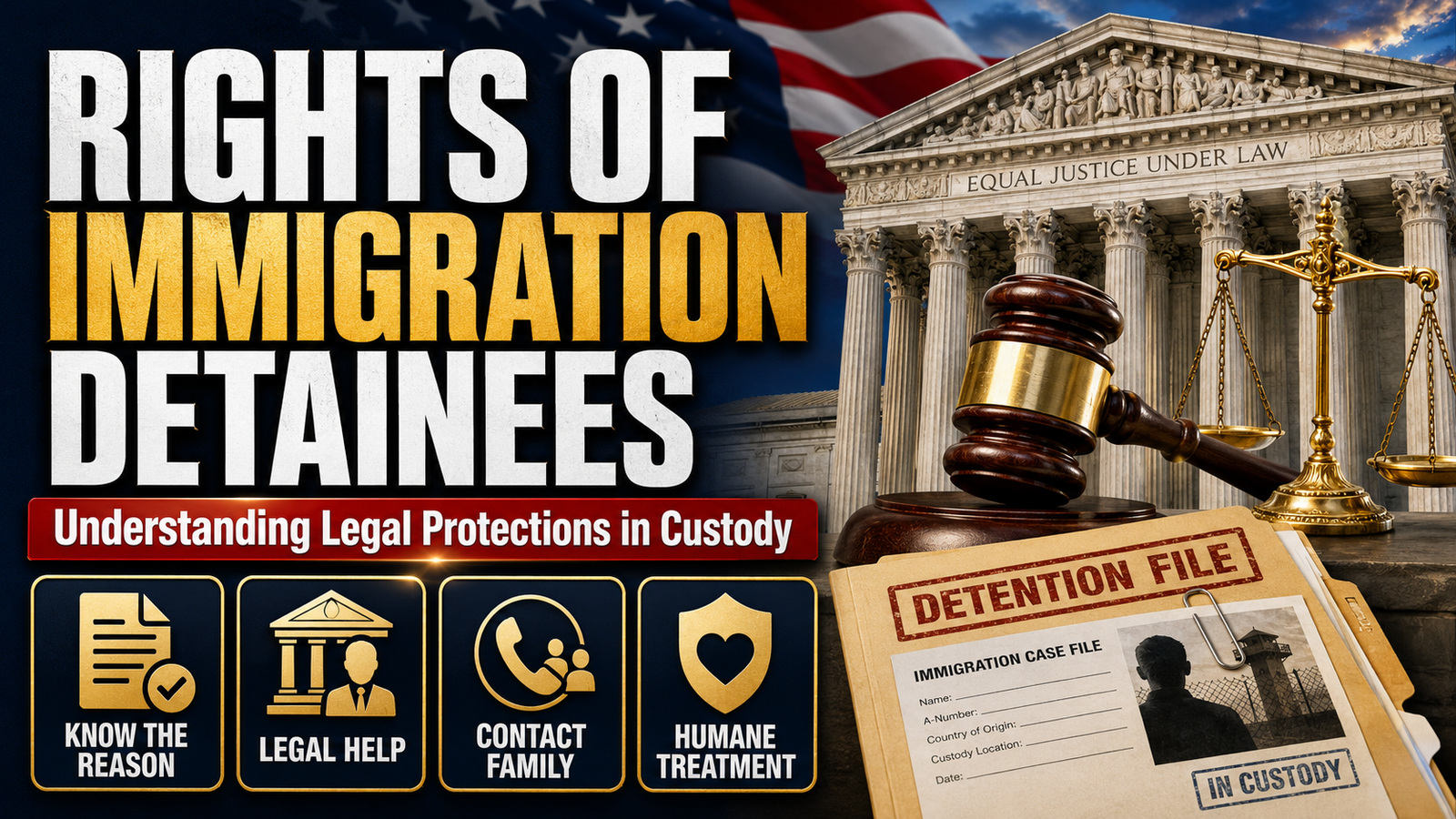
Rights of Immigration Detainees: Understanding Legal Protections in Immigration Custody
Immigration detention can be a stressful and confusing experience. People held by U.S. immigration authorities have certain legal rights that protect them during detention and immigration proceedings.
The rights of immigration detainees come from federal laws, constitutional protections, and court decisions. These rights do not guarantee a specific immigration outcome, but they help ensure that government officials follow proper legal procedures.
Understanding these rights can help detainees and their families know what protections may apply and what legal options may be available.
What Are the Rights of Immigration Detainees?
Immigration detainees are people held by U.S. immigration authorities, usually through U.S. Immigration and Customs Enforcement (ICE), while their immigration cases are reviewed.
Although immigration detention is a civil process rather than a criminal punishment, detainees still have important legal protections.
Common rights include:
- The right to know the reason for detention
- The right to legal representation at their own expense
- The right to communicate with family and legal representatives
- The right to receive proper procedures in immigration proceedings
- The right to challenge unlawful detention
- The right to humane treatment while detained
Right to Understand the Reason for Detention
A person taken into immigration custody should receive information about why they are being detained.
Government officials generally must follow legal procedures when detaining someone, including providing required notices about immigration proceedings.
Important information may include:
- The reason for detention
- Immigration charges or allegations
- Hearing information
- Available legal options
Understanding the basis of detention is important because it allows a person to respond and seek legal help.
Right to Legal Representation
One of the most important rights of immigration detainees is the ability to seek legal assistance.
However, immigration detainees generally do not have a government-appointed lawyer in immigration court.
A detainee may:
- Hire an immigration attorney
- Request assistance from nonprofit legal organizations
- Represent themselves if they cannot obtain a lawyer
Having legal representation can help with:
- Understanding immigration charges
- Preparing applications for relief
- Challenging detention issues
- Presenting evidence in court
Right to Contact Family and Legal Help
Immigration detainees have the ability to communicate with certain people, including:
Access to communication helps detainees prepare their legal cases and maintain important relationships during detention.
Right to an Immigration Hearing
Many immigration detainees have the right to appear before an immigration judge.
During immigration proceedings, a person may have the opportunity to:
- Respond to government allegations
- Present evidence
- Request legal relief
- Explain their circumstances
The immigration judge reviews the case and makes decisions based on immigration laws.
Right to Challenge Unlawful Detention
Immigration detainees may challenge detention if they believe the government is holding them unlawfully.
Possible legal options may include:
- Requesting a bond hearing when available
- Filing legal motions
- Seeking federal court review through habeas corpus in certain situations
A federal habeas corpus petition may allow a court to review whether detention follows federal law.
Right to a Bond Hearing
Some immigration detainees may be eligible to request release through a bond hearing.
During a bond hearing, an immigration judge may consider factors such as:
- Risk of missing future hearings
- Danger to the community
- Personal circumstances
- Immigration history
Not every detainee is eligible for bond, and rules depend on the individual case.
Right to Humane Treatment While Detained
Immigration detention facilities must meet certain standards regarding the treatment of detainees.
Basic protections may include:
- Access to medical care
- Adequate food and water
- Safe living conditions
- Protection from abuse or mistreatment
Complaints about detention conditions may be reported through available grievance procedures or legal channels.
Rights During Immigration Court Proceedings
Immigration detainees have procedural rights during hearings.
These may include:
- Receiving notice of proceedings
- Presenting evidence
- Responding to government arguments
- Requesting certain forms of immigration relief
Examples of possible immigration relief may include:
- Asylum
- Cancellation of removal
- Other protections allowed under immigration law
Eligibility depends on the specific facts of each case.
Rights During ICE Enforcement Actions
ICE officers must follow legal requirements when conducting immigration enforcement actions.
Issues that may affect legal rights include:
- Whether officers had proper authority
- Whether required procedures were followed
- Whether constitutional protections were respected
The rules can vary depending on where and how enforcement occurs.
Can Immigration Detainees Refuse to Answer Questions?
Immigration detainees have legal protections regarding certain questions and statements.
A person should understand:
- Some information may be required during immigration processing
- Statements made to officials may affect an immigration case
- Legal advice can help determine how to respond
Speaking with an immigration attorney can help a person understand their options.
Common Challenges Faced by Immigration Detainees
Immigration detainees often face difficulties such as:
- Limited access to legal resources
- Language barriers
- Difficulty contacting family
- Long detention periods
- Confusion about court procedures
These challenges make understanding legal rights especially important.
What Family Members Can Do to Help an Immigration Detainee
Family members can support detainees by:
- Helping locate immigration records
- Finding legal assistance
- Gathering important documents
- Maintaining communication
- Tracking court dates
Useful documents may include:
- Identification records
- Immigration paperwork
- Family records
- Employment documents
- Evidence supporting the person’s case
How to Check an Immigration Detention Case
Families and detainees can track immigration proceedings through available government resources.
Useful information includes:
- Alien registration number (A-Number)
- Court location
- Hearing dates
- Detention facility information
Legal representatives can often provide the most accurate case updates.
Common Misunderstandings About Immigration Detainee Rights
Misunderstanding 1: Immigration Detention Means Someone Is Guilty of a Crime
Immigration detention is generally a civil process. Being detained does not automatically mean a person committed a crime.
Misunderstanding 2: Every Detainee Gets a Free Lawyer
Unlike criminal cases, immigration proceedings generally do not provide government-appointed attorneys.
Misunderstanding 3: Immigration Officials Can Ignore Legal Rights
Immigration authorities must follow applicable laws and constitutional protections.
Misunderstanding 4: Detention Always Leads to Deportation
Being detained does not automatically determine the final outcome of an immigration case.
A person may have legal options depending on their circumstances.
Frequently Asked Questions
What are the basic rights of immigration detainees?
Immigration detainees may have rights related to legal procedures, communication, legal assistance, court hearings, and protection from unlawful detention.
Can immigration detainees get a lawyer?
Yes. Detainees can hire an attorney or seek help from nonprofit legal organizations, but the government generally does not provide free lawyers in immigration court.
Can ICE hold someone forever?
No. Immigration detention is subject to legal limits and review procedures. The legality of continued detention may depend on the circumstances of each case.
Can an immigration detainee challenge detention in federal court?
In some situations, a detainee may ask a federal court to review whether detention is lawful through a habeas corpus petition.
What should a person do after being detained by ICE?
A detained person should try to understand the reason for detention, contact legal assistance if possible, and keep track of immigration court information.
Conclusion
The rights of immigration detainees provide important protections during immigration detention and court proceedings. While immigration authorities have the power to enforce immigration laws, they must follow legal procedures and respect applicable rights.
Every immigration case is different. The best way to understand available options is to review the specific facts with a qualified immigration attorney or legal service provider.
Disclaimer:
The information provided in this article is for general educational and informational purposes only and should not be considered legal advice. Immigration detention laws, procedures, and detainee rights can be complex and may change over time. Each immigration case depends on specific facts, legal circumstances, and applicable regulations. While we aim to provide accurate and reliable information, this content does not guarantee any specific outcome. Readers should consult a qualified immigration attorney or legal professional for advice regarding their individual situation. This website does not provide legal representation or create an attorney-client relationship.