
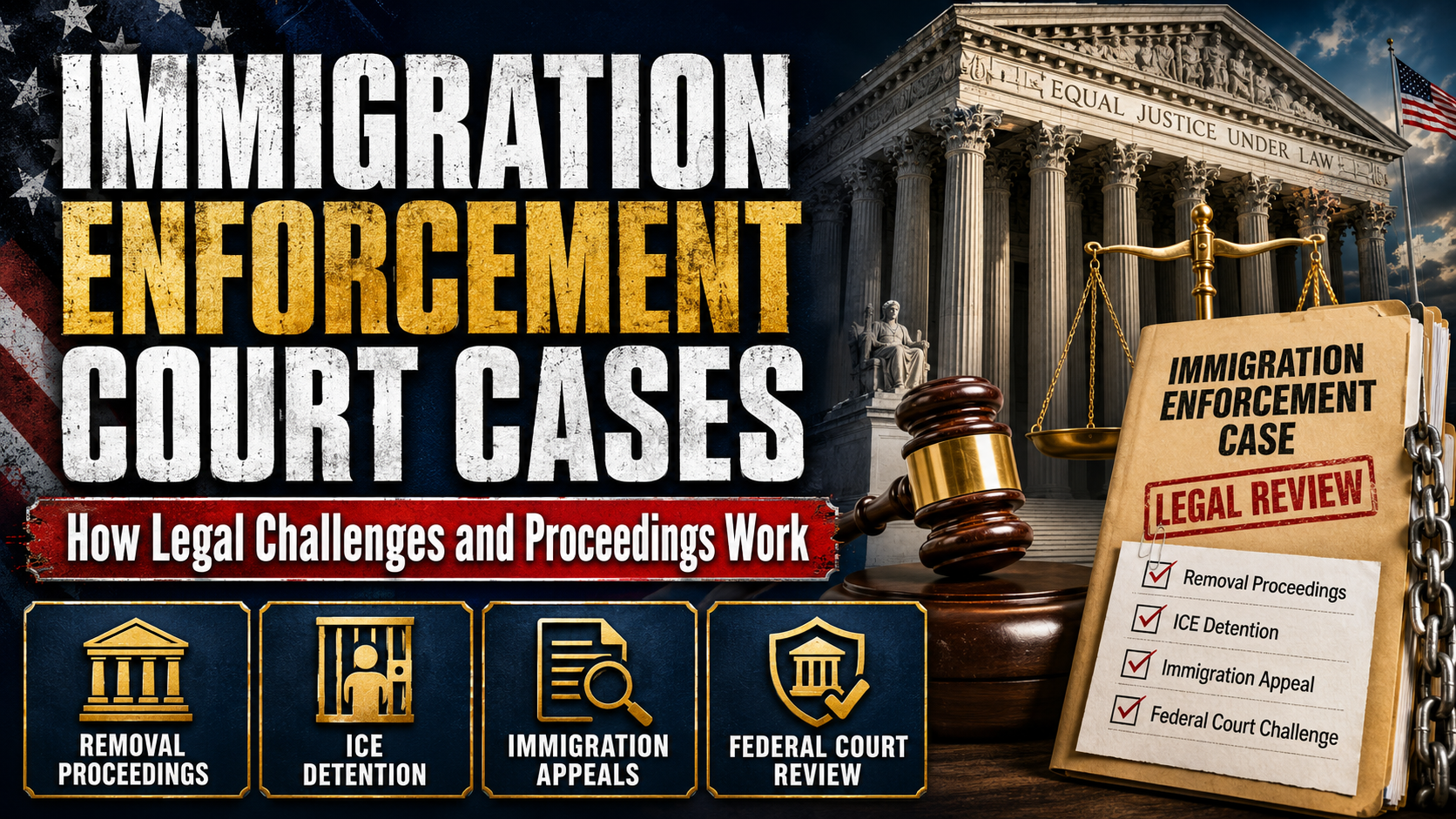
Immigration Enforcement Court Cases: How Legal Challenges and Proceedings Work
Immigration enforcement court cases involve legal disputes connected to the government’s efforts to enforce U.S. immigration laws. These cases may involve detention, removal proceedings, immigration status issues, federal court challenges, or claims that government agencies failed to follow legal procedures.
Immigration law involves several different courts and agencies, which can make the process difficult to understand. A person facing immigration enforcement may deal with immigration courts, federal courts, or government agencies such as U.S. Immigration and Customs Enforcement (ICE).
Understanding how these cases work helps explain the rights, procedures, and possible outcomes involved.
What Are Immigration Enforcement Court Cases?
Immigration enforcement court cases are legal proceedings involving actions taken by immigration authorities.
These cases may involve:
- Deportation or removal proceedings
- ICE detention challenges
- Requests for release or bond hearings
- Immigration status disputes
- Appeals of immigration decisions
- Challenges to government actions
The type of case depends on the person’s situation, immigration history, and the action being challenged.
Who Handles Immigration Enforcement Cases?
Immigration cases may involve several different legal systems.
Immigration Courts
The Executive Office for Immigration Review (EOIR) oversees immigration courts.
Immigration judges may handle:
- Removal proceedings
- Requests for certain immigration relief
- Applications to remain in the United States
Immigration courts are different from federal courts.
Federal Courts
Federal courts may become involved in certain immigration matters.
Examples include:
- Challenges involving detention
- Habeas corpus petitions
- Constitutional claims
- Reviews of certain government actions
Federal courts generally do not handle every immigration decision.
Immigration Agencies
Several government agencies play roles in immigration enforcement.
These include:
- U.S. Immigration and Customs Enforcement (ICE)
- U.S. Citizenship and Immigration Services (USCIS)
- Customs and Border Protection (CBP)
Each agency has different responsibilities.
Common Types of Immigration Enforcement Court Cases
1. Removal or Deportation Proceedings
Removal proceedings are cases where the government argues that a person should be removed from the United States.
During these proceedings, a person may have opportunities to:
- Respond to government allegations
- Present evidence
- Request legal relief
- Appeal certain decisions
The outcome depends on the facts and applicable immigration laws.
2. ICE Detention Cases
Some immigration enforcement cases involve people held in ICE custody.
Legal challenges may address issues such as:
- Length of detention
- Requests for bond hearings
- Claims that detention is unlawful
- Failure to follow legal procedures
A person may seek court review of detention issues in certain circumstances.
3. Immigration Appeals
A person who disagrees with an immigration court decision may have options to appeal.
Appeals may involve:
- Legal errors
- Incorrect application of immigration rules
- Problems with the hearing process
Appeal rights depend on the type of decision and applicable rules.
4. Federal Court Challenges
Some immigration disputes are brought before federal courts.
Examples may include:
- Claims involving detention authority
- Challenges to government actions
- Requests for review of legal issues
Federal court involvement depends on the specific circumstances.
How Does an Immigration Enforcement Case Begin?
An immigration enforcement case may begin when immigration authorities take action against an individual.
The process may include:
Notice From the Government
A person may receive documents explaining:
- The government’s allegations
- The reason for the proceedings
- The date and location of hearings
Court Hearings
Immigration hearings allow both sides to present information.
The person may:
- Respond to allegations
- Submit evidence
- Request legal protection
- Explain their circumstances
Judge’s Decision
The immigration judge reviews the information and makes a decision based on immigration law.
Possible outcomes vary depending on the case.
What Rights Do People Have in Immigration Court?
People involved in immigration proceedings generally have certain legal rights, including:
- The opportunity to present their case
- The ability to review government allegations
- The ability to submit evidence
- The ability to have legal representation at their own expense
Immigration cases are complex, and having qualified legal assistance may be helpful.
How Are Immigration Enforcement Cases Different From Criminal Cases?
Immigration enforcement and criminal cases are separate legal matters.
| Immigration Case | Criminal Case |
|---|---|
| Deals with immigration laws | Deals with criminal laws |
| Usually involves immigration agencies or courts | Involves criminal prosecutors and courts |
| May result in removal decisions | May result in criminal penalties |
A person may have both immigration and criminal issues at the same time, but they follow different procedures.
What Evidence Is Important in Immigration Cases?
Evidence can play an important role.
Examples include:
- Identity documents
- Immigration records
- Family information
- Employment history
- Court records
- Evidence supporting legal claims
The type of evidence needed depends on the specific legal issue.
Common Challenges in Immigration Enforcement Cases
Immigration cases often involve difficulties such as:
Complex Legal Rules
Immigration laws contain detailed requirements and procedures.
Multiple Government Agencies
Different agencies may handle different parts of a person’s case.
Strict Deadlines
Missing deadlines can affect legal options.
Limited Access to Resources
Some people may struggle to obtain legal assistance or understand court requirements.
What Happens After an Immigration Court Decision?
The next steps depend on the outcome.
Possible actions may include:
- Following the court’s decision
- Requesting review or appeal
- Applying for available legal relief
- Responding to further government actions
Not every decision can be appealed, and deadlines may apply.
Can Immigration Enforcement Decisions Be Challenged?
In some situations, yes.
Possible challenges may involve:
- Errors in legal procedures
- Incorrect application of immigration law
- Unlawful detention claims
- Violations of legal rights
The available options depend on the facts and the type of decision involved.
Common Mistakes in Immigration Enforcement Cases
People may harm their case by:
- Missing court hearings
- Ignoring government notices
- Providing incomplete information
- Failing to keep documents organized
- Waiting too long to seek legal help
Following court requirements and deadlines is extremely important.
Frequently Asked Questions
What court handles immigration enforcement cases?
Many immigration matters are handled by immigration courts, while certain legal challenges may be heard in federal courts.
Can ICE decisions be challenged in court?
In some situations, ICE actions may be challenged through legal procedures, depending on the issue involved.
Does an immigration court case mean automatic deportation?
No. A case involves a legal process where the person may have opportunities to respond and present arguments.
Can someone appeal an immigration court decision?
Some immigration decisions can be appealed, but the available options depend on the type of decision and applicable rules.
How long do immigration enforcement cases take?
The timeline varies widely depending on the case complexity, court schedule, appeals, and other factors.
Final Thoughts
Immigration enforcement court cases involve complicated legal procedures that may include immigration courts, federal courts, and government agencies. Each case depends on individual facts, legal status, and the specific actions being challenged.
Understanding the difference between detention cases, removal proceedings, appeals, and federal court challenges can make the process easier to follow.
Because immigration law changes frequently and cases can have serious consequences, individuals involved in immigration enforcement proceedings should consider seeking guidance from a qualified immigration attorney.
Disclaimer:
The information provided in this article about immigration enforcement court cases is for general informational and educational purposes only. It does not constitute legal advice and should not be considered a substitute for guidance from a qualified immigration attorney or legal professional. Immigration laws, court procedures, and enforcement policies can change and may vary depending on individual circumstances. Every immigration case is different, and outcomes depend on specific facts, evidence, and applicable laws. If you are involved in an immigration enforcement matter, consult a licensed attorney for advice related to your situation.