
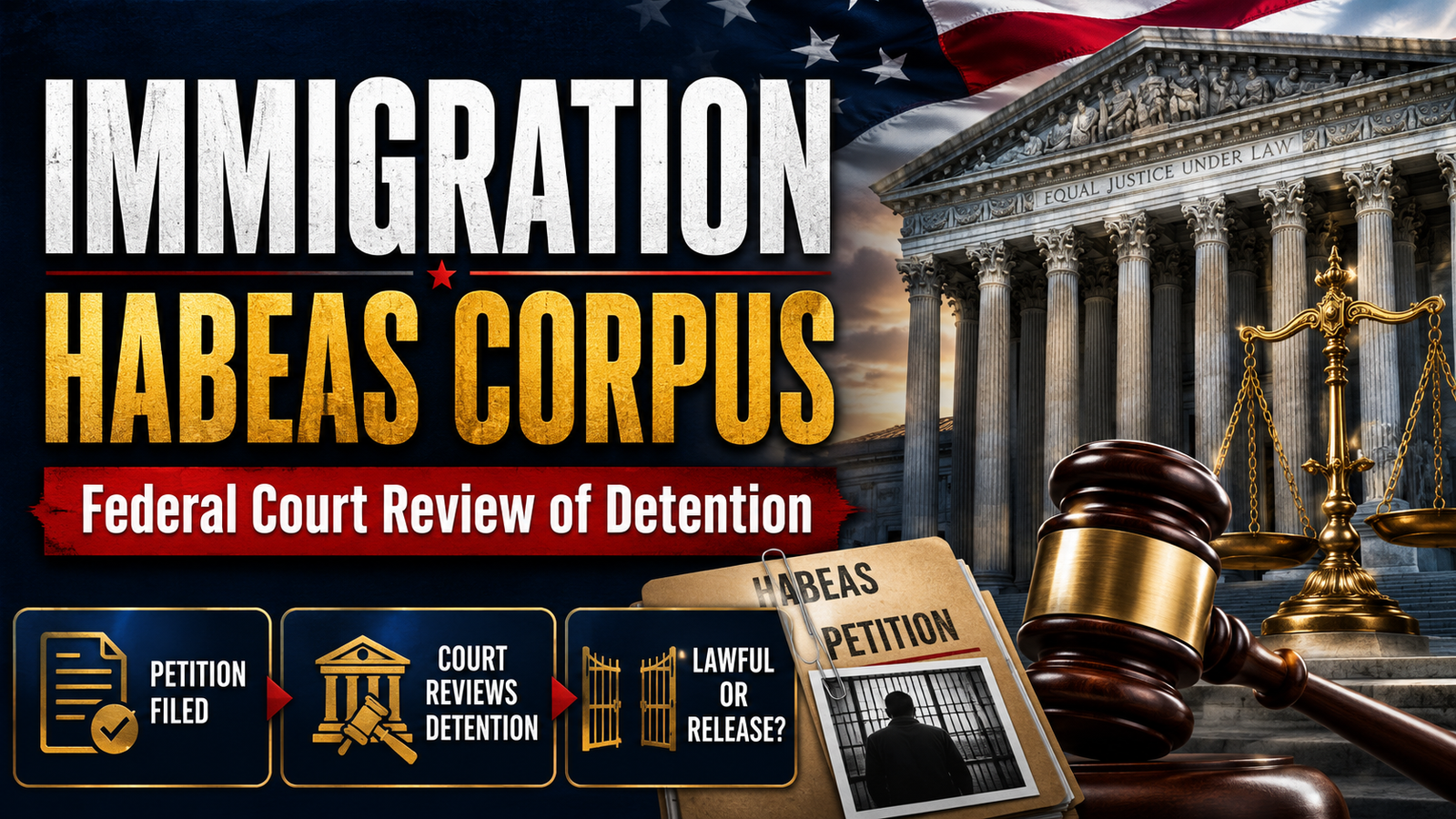
What Is Immigration Habeas Corpus? A Guide to Federal Court Review of Immigration Detention
Immigration habeas corpus is a legal process that allows a person in immigration custody to ask a federal court to review whether their detention is lawful.
It does not usually decide whether someone should receive immigration status or remain in the United States permanently. Instead, it focuses on whether the government has the legal authority to keep that person detained.
A habeas corpus petition can be an important legal tool for immigrants who believe their detention violates federal law, constitutional protections, or proper legal procedures.
What Does Habeas Corpus Mean?
The term habeas corpus comes from Latin and means “produce the body.”
In simple terms, it allows a person to ask a court:
“Does the government have a lawful reason to keep me detained?”
The court reviews whether the detention follows legal requirements.
Habeas corpus is recognized as an important protection against unlawful government detention.
How Does Immigration Habeas Corpus Work?
An immigration habeas corpus case usually begins when a detained immigrant files a petition in federal court.
The person filing the petition is called the petitioner.
The government officials responsible for the detention are usually the respondents.
The court may review questions such as:
- Is the detention legally authorized?
- Has the government followed required procedures?
- Has the detention continued for an unreasonable period?
- Are constitutional rights involved?
The federal court does not replace immigration officials or immigration judges. It reviews whether the government acted within its legal authority.
Why Do Immigrants File Habeas Corpus Petitions?
Immigration detainees may use habeas corpus when they believe their detention raises legal concerns.
Common reasons include:
- Long-term immigration detention
- Lack of proper legal procedures
- Government failure to follow a court order
- Disputes about detention authority
- Constitutional challenges related to custody
Each case depends on its own facts and applicable laws.
What Can a Federal Court Do in an Immigration Habeas Case?
A federal court may have several options after reviewing a habeas petition.
The court may:
- Order the government to provide additional information
- Require officials to follow legal procedures
- Review whether detention is lawful
- Order release in certain circumstances
- Dismiss the petition if detention is legally valid
The outcome depends on the specific facts and legal issues involved.
Immigration Habeas Corpus vs Immigration Court
Many people confuse federal court with immigration court.
They are different systems.
| Immigration Court | Federal Court |
|---|---|
| Handles immigration proceedings | Reviews federal legal issues |
| Part of the Executive Branch | Part of the Judicial Branch |
| Decides removal cases and immigration benefits | Reviews whether government actions follow the law |
An immigration judge may decide issues such as deportation or relief from removal.
A federal court hearing a habeas petition generally focuses on whether detention itself is lawful.
Who Can File an Immigration Habeas Corpus Petition?
A person generally files an immigration habeas petition when they are in government custody and believe there is a legal problem with that detention.
Possible petitioners include:
- Immigration detainees
- Certain individuals held by immigration authorities
- People challenging the legality of continued detention
Eligibility depends on the circumstances and current immigration laws.
Where Are Immigration Habeas Corpus Cases Filed?
Immigration habeas petitions are usually filed in federal district courts.
The correct court depends on legal rules, including factors such as:
- Where the person is detained
- Where government officials responsible for detention are located
- Applicable federal court jurisdiction rules
A lawyer can help determine the proper filing location.
What Happens After Filing a Habeas Petition?
A typical process may include:
- Filing the petition in federal court
- Government response
- Review of legal arguments
- Possible hearings
- Judge’s decision
The timeline varies depending on:
- Case complexity
- Court workload
- Government response
- Legal issues involved
Some cases may be resolved quickly, while others may take longer.
Can Habeas Corpus Stop Deportation?
Generally, immigration habeas corpus focuses on detention, not directly on whether someone can be removed from the United States.
However, some cases may involve related legal issues connected to government authority or procedures.
A person facing removal may have other legal options through immigration courts or appeals.
Can a Federal Judge Order ICE to Release Someone?
In certain cases, a federal court may order immigration authorities to take action regarding detention.
For example, if the court determines that detention is unlawful or that legal requirements were not followed, it may provide a legal remedy.
However, courts review each situation individually and do not automatically order release in every case.
Common Misunderstandings About Immigration Habeas Corpus
Misunderstanding 1: Habeas Corpus Automatically Gives Immigration Status
It does not.
A successful habeas petition does not automatically provide:
- Citizenship
- A green card
- Permanent residency
It generally concerns the legality of detention.
Misunderstanding 2: Federal Courts Handle All Immigration Decisions
Federal courts have limited authority.
Many immigration decisions are handled through immigration courts and administrative appeals.
Misunderstanding 3: Filing a Petition Guarantees Release
Filing a habeas petition only starts a legal review.
The court must examine the facts and applicable law before making a decision.
Examples of Immigration Habeas Corpus Cases
Example 1: Lengthy Detention
A person has remained detained for an extended period while immigration proceedings continue.
They may ask a federal court to review whether continued detention is legally justified.
Example 2: Failure to Follow Court Requirements
A federal court orders government officials to take certain actions, but the person claims those instructions were not followed.
The court may review whether officials complied.
Example 3: Challenging Legal Authority
A detainee argues that the government lacks legal authority to continue holding them.
The federal court may examine the legal basis for detention.
How to Find Immigration Habeas Corpus Court Records
People can research federal court cases through:
- PACER (Public Access to Court Electronic Records)
- Federal court websites
- Published court opinions
- Government legal filings
Important information includes:
- Case number
- Court name
- Judge
- Filing date
- Court orders
- Final decision
Frequently Asked Questions
What is immigration habeas corpus?
Immigration habeas corpus is a legal process that allows a person in immigration detention to ask a federal court to review whether their detention is lawful.
Can ICE be challenged through habeas corpus?
Yes. In certain situations, immigration detainees can challenge the legality of their detention through federal habeas corpus proceedings.
Does habeas corpus apply only to immigrants?
No. Habeas corpus can apply to different types of government detention. Immigration cases are one area where it is used.
Can a federal judge release an immigration detainee?
A federal judge may order release or other remedies in certain cases if detention is found to violate legal requirements.
Do I need a lawyer for an immigration habeas case?
Federal habeas cases can involve complex legal issues. Many people seek assistance from an immigration attorney or legal aid organization.
Conclusion
Immigration habeas corpus provides a way for detained immigrants to ask federal courts to review whether their detention is lawful. It focuses on government authority and legal procedures rather than directly deciding immigration status.
Federal courts play an important role in ensuring that immigration authorities follow the law while carrying out detention responsibilities. Each case depends on specific facts, court decisions, and applicable legal rules.